Friday, 6 March 2026

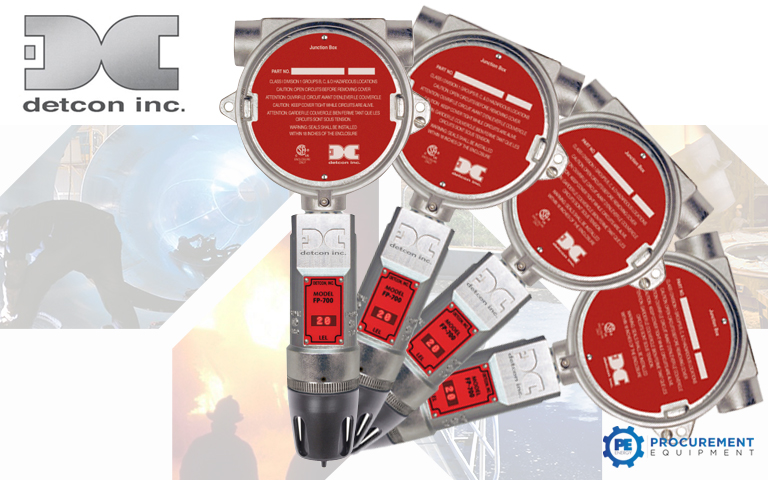
Model 700 Industrial Gas Detector: The Complete Guide to H2S, CO, LEL, and Toxic Gas Detection

In industrial environments, the gases you can't see are the ones that kill.

Hydrogen sulfide at 100 ppm can cause death within minutes. Carbon monoxide is odorless and cumulative. Combustible gases at the right concentration turn entire facilities into bombs waiting for a spark.

Your gas detection system is the only thing standing between normal operations and catastrophe. And if that system fails—due to corrosion, vibration, temperature extremes, or sensor drift—you won't get a second chance.

Why Standard Gas Detectors Fail in Harsh Industrial Environments

Most gas detectors are designed for controlled environments. They work fine in climate-controlled buildings with stable temperatures and minimal vibration.

But industrial sites aren't controlled environments. They're hostile:

Temperature extremes. Desert installations see 120°F days and freezing nights. Arctic operations run at -40°F. Standard sensors drift, fail, or give false readings outside narrow temperature bands.

Corrosive atmospheres. Salt air, chemical vapors, and hydrogen sulfide attack electronics. Water ingress destroys circuitry. Conventional housings corrode and fail.

Vibration and shock. Pumps, compressors, and heavy equipment create constant vibration. Solder joints crack. Sensors lose calibration. Connections work loose.

Remote locations. Offshore platforms, pipeline stations, and remote wells can't afford frequent maintenance visits. Sensors that need monthly calibration or annual replacement create operational nightmares.

How the Model 700 Gas Detector Solves These Problems

The Model 700 intelligent sensor module was engineered specifically for harsh and extreme locations. Every design decision addresses real-world failure modes that plague conventional detectors.

Environmentally Bulletproof Gas Detector Construction

The Model 700 uses electropolished 316 stainless steel housing—the same material grade used in pharmaceutical and marine applications. Combined with 100% encapsulated circuitry, there's no path for water, corrosive gases, or contamination to reach sensitive electronics.

Gold-plated mating pins eliminate contact corrosion. Bullet-proof I/O protection handles over-voltage events, miswiring, and EMI/RFI interference that would destroy lesser instruments.

Multiple Gas Sensor Technologies in One Platform

The Model 700 supports multiple sensor technologies for different gas detection applications:

H2S Gas Detection: CHEMFET and Electrochemical Sensors

For hydrogen sulfide detection, choose CHEMFET MOS solid-state technology with a 10-year sensor warranty for extreme environments, or electrochemical sensors for quick response and low power consumption. For comprehensive flame and gas detection solutions, the Model 700 integrates seamlessly with complete safety systems.

Combustible Gas Detection: Catalytic and Infrared LEL Sensors

Catalytic bead sensors provide non-selective combustible gas detection with rugged construction. Infrared sensors offer 5-year warranty coverage for hydrocarbon detection without oxygen dependency or catalyst poisoning concerns.

Toxic Gas and Oxygen Monitoring

Electrochemical sensors detect carbon monoxide, ammonia, chlorine, and other toxic gases with quick response times. Photo ionization detectors (PID) provide universal VOC detection. Oxygen sensors feature embedded temperature compensation with 2-year warranty.

Modular Plug-and-Play Gas Sensor Design

Unlike fixed-sensor detectors that require complete unit replacement when sensors fail, the Model 700 uses plug-in replaceable sensor modules. Quick-thread release allows field sensor replacement without special tools or hot work permits.

The universal design concept means minimal spare parts inventory. One spare sensor module can service multiple detector installations.

Model 700 Gas Detector Output and Integration

The Model 700 provides dual redundant outputs for safety system integration:

4-20 mA analog signal: Linear output compatible with any PLC, DCS, or safety controller. Industry standard for gas detection systems.

Modbus RS-485 serial: Digital output for advanced monitoring, diagnostics, and remote configuration. Enables predictive maintenance and sensor health monitoring.

As a component of a SIL-rated system, the Model 700's Safe Failure Fraction (SFF) meets requirements for SIL 2 rated safety systems—critical for applications where gas detection is part of emergency shutdown logic.

Industrial Gas Detector Applications

The Model 700 is deployed across industries where gas hazards meet harsh environments:

Oil and Gas H2S and LEL Detection

Upstream production, midstream pipelines, and downstream refineries face constant H2S and combustible gas exposure. The Model 700's corrosion-resistant construction handles sour gas environments where conventional detectors fail within months. Learn more about oil and gas safety with advanced flame detectors.

Chemical Plant Toxic Gas Monitoring

Chemical manufacturing requires detection of specific toxic gases—ammonia, chlorine, HCl, SO2. The Model 700's modular design allows mixing sensor types across a facility based on local hazards.

Confined Space Gas Detection

Tanks, vessels, and enclosed spaces require monitoring for oxygen deficiency, toxic gases, and combustible atmospheres before and during entry. The scrolling LED display provides clear readings visible through viewing ports. For area monitoring, pair with flame detection systems for complete hazard coverage.

Model 700 Gas Detector Specifications Summary

Power: 11.5 - 28 VDC
Output: 4-20 mA analog + Modbus RS-485
Housing: Electropolished 316 Stainless Steel
Connection: 3/4" NPT Thread
Certifications: SIL 2 capable

Review the complete Model 700 industrial gas detector technical specifications and sensor options below.

Model 700

Industrial Gas Detection Sensor

Intelligent sensor modules for harsh and extreme locations

Environmentally Bulletproof

  • • Electropolished 316SS Construction
  • • 100% Encapsulated Circuitry
  • • Water/Corrosion/Vibration Resistant
  • • Gold Plated Mating Pins

Modular & Serviceable

  • • Plug and Play Components
  • • Quick Thread Release
  • • Minimal Spare Parts
  • • Integral Calibration Port

Failsafe Interface

  • • Dual Redundant Outputs
  • • 4-20mA + Modbus RS-485
  • • SIL 2 System Compatible
  • • LED Display

Sensor Technologies

Hydrogen Sulfide (H2S)

CHEMFET MOS Solid State

10-year warranty • Wide temp range • Harsh locations

Electrochemical

Quick response • Low power • Stable calibration

Combustible Gas (LEL)

Catalytic Bead

Non-selective • 3-5 year life • Rugged

Infrared

5-year warranty • Hydrocarbon specific • Plug-in

Toxic Gases

Electrochemical

CO, NH3, Cl2, HCl, SO2 • Quick response

Photo Ionization (PID)

Universal VOC • Non-selective • Plug-in

Oxygen & CO2

O2 Electrochemical

2-year warranty • Temp compensated

CO2 Infrared

5-year warranty • Plug-in optical

General Specifications

Parameter Specification
Power Supply 11.5 - 28 VDC
Analog Output 4-20 mA Linear
Digital Output Modbus RS-485
Housing Material Electropolished 316 Stainless Steel
Connection 3/4" NPT Thread
Display Scrolling Alpha-Numeric LED
Safety Rating SIL 2 System Compatible

Anatomy of Model 700

Junction Box

RS-485 Modbus, Surge Protection

LED Display

Scrolling readout, status, user interface

Plug-in Sensors

Catalytic, IR, Solid State, Electrochemical

316SS Housing

Threaded quick release, corrosion resistant

Magnetic Programming

Non-intrusive handheld magnet interface

Encapsulated Circuitry

Eliminates water, corrosion, vibration failures

See Full Article Here: Model 700 Industrial Gas Detector: The Complete Guide to H2S, CO, LEL, and Toxic Gas Detection

Wednesday, 4 March 2026

Crane Taglines: Why the IndustrialHD Redtail Coated Tagline Prevents Accidents and Improves Lifting Operations

A suspended load is a swinging load. And a swinging load is an accident waiting to happen.

Every crane operator knows this. Every rigger has seen it. The moment a load leaves the ground, it becomes unpredictable—swaying into obstacles, rotating unexpectedly, or worse, swinging toward workers on the ground.

The solution is simple in concept: a tagline. But the wrong tagline creates its own hazards.

Why Traditional Rope Taglines Fail in Crane Operations

Standard rope seems like the obvious choice. It's cheap. It's everywhere. And it's dangerous.

Here's what happens with rope taglines:

Knots and tangles. Natural fiber and synthetic ropes kink, knot, and tangle under load. A tangled tagline is useless when you need immediate control.

Rope burns. When a load shifts suddenly, rope sliding through bare hands causes friction burns. Gloves help, but reduce grip and dexterity.

Trip hazards. Loose rope on the ground catches feet. Workers have been pulled off balance—or dragged—by rope caught under loads.

Low visibility. Standard rope blends into industrial environments. In low light or dusty conditions, it's nearly invisible until someone trips over it.

How the IndustrialHD Redtail Tagline Solves These Problems

The Redtail tagline is engineered specifically for crane safety. Every feature addresses a real-world problem that rope taglines create.

No-Tangle Tagline Construction

The Redtail always retains its shape. It doesn't kink, knot, or tangle—even after repeated use. When you need control, you get it instantly without fighting with twisted line.

High-Visibility Orange Coating

The impact-resistant nylon casing is bright orange—visible in low light, dusty conditions, and cluttered job sites. Workers can see the tagline position at a glance, reducing trip hazards and improving load awareness.

Safe-Grip Coated Handle

The grip end features additional high-visibility orange coating that:

- Provides secure grip without gloves
- Repels corrosive materials common on industrial sites
- Eliminates rope burn risk during sudden load shifts

ANSI-Rated Rebar Gate Hook Snaphook

The snaphook is rated to 5,000 lbs—ANSI standard. Quick attach and release means faster rigging without compromising safety. No fumbling with knots or splices.

Tagline Applications in Crane Safety

Proper tagline use is essential for:

Load Control During Lifting

Ground personnel use taglines to pivot loads as they swing on the crane's hook, preventing collisions with surrounding structures, equipment, or workers. This is especially critical in congested areas or near power lines.

Load Positioning During Placement

When setting loads, taglines give precise directional control that hand signals alone can't achieve. The operator controls height; the ground crew controls orientation.

Wind Compensation

Wind creates unpredictable load movement. Taglines let workers counteract wind forces and maintain control throughout the lift. For more industrial safety equipment, including other rigging accessories, PE Energy offers a full range of solutions.

Selecting the Right Tagline Length

The IndustrialHD Redtail is available in seven lengths: 10ft, 15ft, 20ft, 25ft, 30ft, 35ft, and 40ft.

General rule: Your tagline should be long enough to keep workers clear of the load's swing radius while maintaining effective control. Too short, and workers are in the danger zone. Too long, and excess line creates trip hazards and reduces control precision.

For most industrial lifting operations, 20ft-25ft taglines provide the optimal balance of safety distance and control. Longer 35ft-40ft lines are typically reserved for high-reach cranes or situations requiring maximum standoff distance.

View the full range of IndustrialHD products including taglines, dope brushes, and other industrial supplies.

Review the complete IndustrialHD Redtail Tagline specifications below.

TAGLINE REDTAIL COATED NO TANGLE

WITH SNAPHOOK

Taglines are specially designed to be a safe alternative to ineffective and hazardous rope. When a crane lifts an object, it can swing into objects around it, into power lines or, by swinging, create hazards to personnel on the ground. Taglines, attached to the load, allow ground personnel to pivot the load as it swings on the crane's hook, so that it doesn't collide with objects around it.

Using taglines can eliminate potential hand injuries and unnecessary delays created by out-of-control loads during lifting and moving. The taglines are tangle resistant and knot free and feature a high visibility coating to repel corrosive material and be seen in low light situations. They always retain their shape and are easily rolled up for storage.


  • High visibility orange coated end for easy safe grip and low light applications

  • ANSI standard rebar gate hook rated to 5000 lbs

  • Quick attach and release

  • High visibility, impact-resistant nylon casing

  • Excellent control

  • No knots, tangles or cut-offs

  • No rope burns

  • No trip hazard or risk of being dragged

  • Flexible for easy line storage

Available in these lengths

IndustrialHD

10ft Tagline Redtail Coated No Tangle With Snaphook
15ft Tagline Redtail Coated No Tangle With Snaphook
20ft Tagline Redtail Coated No Tangle With Snaphook
25ft Tagline Redtail Coated No Tangle With Snaphook
30ft Tagline Redtail Coated No Tangle With Snaphook
35ft Tagline Redtail Coated No Tangle With Snaphook
40ft Tagline Redtail Coated No Tangle With Snaphook

Tagline with Snaphook

Crane Safety Diagram

Slings in good condition and adequate for load

Load Direction - Load equally distributed

Tagline for control of load

Work area clear

Load should be rested on timber dunnage

Always use a dry fibre rope tagline to control the load

Tagline in use

Original Post Here: Crane Taglines: Why the IndustrialHD Redtail Coated Tagline Prevents Accidents and Improves Lifting Operations

Monday, 2 March 2026

Des-Case Desiccant Breathers: How Silica Gel Moisture Control Saves Your Equipment from Invisible Destruction

Your oil looks clean. Your filters are new. Your maintenance schedule is perfect. But there's a silent killer entering your system with every breath your reservoir takes—water vapor that's destroying bearings, degrading lubricant, and accelerating wear you won't see until it's too late.

Every time your hydraulic system cycles, every temperature fluctuation in your gearbox, every change in atmospheric pressure causes your reservoir to "breathe." Air moves in and out. And with that air comes moisture—invisible water vapor that condenses inside your equipment and begins its destructive work.

Moisture contamination is responsible for up to 70% of hydraulic system failures. It promotes rust and corrosion. It degrades lubricant additives. It creates acid byproducts that attack seals and metal surfaces. And standard vent caps do absolutely nothing to stop it.

Why Desiccant Breathers Are Your First Line of Defense

Des-Case desiccant breathers replace passive vent caps with active moisture control. As air enters your reservoir, it passes through silica gel desiccant that strips moisture from the air before it ever reaches your lubricant. The same air that would have deposited condensation inside your equipment instead enters bone-dry.

But moisture removal is only half the equation. Incoming air also carries particulate contamination—dust, dirt, and debris that act as abrasives in your system. Des-Case Standard Series breathers filter incoming air to 3 microns absolute, ensuring both moisture and particles are stopped at the door.

Blue Silica Gel vs. Orange Silica Gel: Choosing Your Desiccant Breather

Des-Case offers two silica gel options, each with distinct visual indication characteristics:

Blue Silica Gel (DC-Series)

Color Change: Blue to Pink

Models: DC-BB, DC-1, DC-2, DC-3, DC-4

Traditional indicating desiccant with high visibility color change when saturated

Orange Silica Gel (DC-W Series)

Color Change: Orange to White

Models: DC-BBW, DC-1W, DC-2W, DC-3W, DC-4W

Cobalt-free formulation for environments with cobalt restrictions

Silica Gel Moisture Control: Technical Specifications

Both blue and orange silica gel breathers share identical physical construction and filtration performance. The choice between them is primarily environmental/regulatory. For detailed specifications on individual models, see the Des-Case DC-4 Desiccant Breather (largest standard model) or DC-3 Desiccant Breather product pages.

Performance Specifications (All Models)

  • Temperature Range: -20°F to 200°F (-29°C to 93°C)
  • Filter Efficiency: 3 μm absolute
  • Chemical Compatibility: All mineral oils, most synthetic oils, diesel fuels
  • Compliance: REACH compliant

Desiccant Breather Sizing by Application

Proper sizing ensures adequate moisture protection without excessive restriction. The Standard Series offers five sizes to match your reservoir capacity:

Model Gearbox/Pump/Tank Hydraulic Reservoir Water Capacity
DC-BB / DC-BBW 15 gal (57 L) 2 gal (8 L) 0.7-0.8 fl oz
DC-1 / DC-1W 35 gal (132 L) 5 gal (19 L) 1.5-1.7 fl oz
DC-2 / DC-2W 200 gal (757 L) 60 gal (227 L) 4-5 fl oz
DC-3 / DC-3W 350 gal (1325 L) 100 gal (379 L) 7-9 fl oz
DC-4 / DC-4W 500 gal (1893 L) 200 gal (757 L) 11-12 fl oz

Sizing Factors Beyond Reservoir Volume

Reservoir size provides a starting point, but proper desiccant breather sizing also considers:

  • Ambient humidity levels — High-humidity environments consume desiccant faster
  • Breathing frequency — Systems with rapid cycling require larger breathers
  • Temperature swings — Greater temperature variation increases moisture ingress
  • Airflow requirements — High flow rates may require larger models to avoid restriction

Desiccant Breather Applications Across Industries

Typical Applications

  • Storage tanks & totes
  • Gearboxes & pumps
  • Wind turbine gearboxes
  • Transformers
  • Hydraulic reservoirs
  • Central lube systems

Key Industries

  • Manufacturing
  • Automotive
  • Power generation
  • Wind energy
  • Oil & gas
  • Mining & heavy equipment

Comparing Desiccant Breather Options

While Des-Case is the industry standard, PE Energy also stocks Air Sentry Desiccant Breathers from Whitmore for applications requiring alternative specifications. The Air Sentry G12S1N offers comparable protection with different mounting options.

Installation and Replacement: Getting Maximum Moisture Control

Des-Case Standard Series breathers feature Multi-Fit male threads that are compatible with multiple thread standards:

Miniature (DC-BB, DC-1)

3/8" Multi-Fit Male Thread
Compatible: NPT, BSPT, BSPP

Standard (DC-2, DC-3, DC-4)

1" Multi-Fit Male Thread
Compatible: NPT, NPSM, BSPT, BSPP

When to Replace Your Desiccant Breather

Monitor the color change indicator to determine replacement timing:

  • Blue silica: Replace when gel turns pink (indicates saturation)
  • Orange silica: Replace when gel turns white
  • Time-based: Replace after 12-18 months regardless of color if not using vacuum indicator
  • Filter saturation: Replace if vacuum indicator shows red (particle clogging)

Protect Your Equipment from Moisture Contamination

Get the right Des-Case desiccant breather for your application. PE Energy stocks all Standard Series models.

Call +1 (281) 310-0628 or Request a Quote

Blue Silica Desiccant Breathers (DC-Series)

Materials & Components

  • Housing: Polycarbonate, Nylon 6/6 30% Glass Filled, Polypropylene
  • Seals: Buna-N, EPDM (Miniature); Buna-N (Standard)
  • Filter Media: Polyurethane, Polyester
  • Hydrophilic Media: Silica Gel (Blue to Pink)
Blue Silica Desiccant Breathers

Specification DC-BB DC-1 DC-2 DC-3 DC-4
Temperature Range -20°F to 200°F (-29°C to 93°C)
Filter Efficiency 3 μm absolute
Desiccant Amount .1 lbs (59g) .3 lbs (127g) .8 lbs (365g) 1.4 lbs (643g) 2.0 lbs (913g)
Water Capacity .8 fl oz (23ml) 1.7 fl oz (50ml) 5 fl oz (142ml) 9 fl oz (251ml) 12 fl oz (356ml)
Style Miniature Miniature Standard Standard Standard

Orange Silica Desiccant Breathers (DC-W Series)

Materials & Components

  • Housing: Polycarbonate, Nylon 6/6 30% Glass Filled, Polypropylene
  • Seals: Buna-N, EPDM (Miniature); Buna-N (Standard)
  • Filter Media: Polyurethane, Polyester
  • Hydrophilic Media: Silica Gel (Orange to White)
Orange Silica
DC-W Series

Specification DC-BBW DC-1W DC-2W DC-3W DC-4W
Temperature Range -20°F to 200°F (-29°C to 93°C)
Filter Efficiency 3 μm absolute
Desiccant Amount .1 lbs (54g) .3 lbs (117g) .7 lbs (337g) 1.3 lbs (594g) 1.9 lbs (843g)
Water Capacity .7 fl oz (20ml) 1.5 fl oz (40ml) 4 fl oz (120ml) 7 fl oz (220ml) 11 fl oz (330ml)
Style Miniature Miniature Standard Standard Standard

Standard Series Breathers

Basic protection from moisture and particulate contamination in lubricant and equipment.

Manufactured by Des-Case Corporation | Distributed by PE Energy

Request a Quote

Orange Silica
Desiccant Breathers
DC-BBW • DC-1W • DC-2W
DC-3W • DC-4W

Product Overview

Materials & Components

  • Housing: Polycarbonate, Nylon 6/6 30% Glass Filled, Polypropylene
  • Seals (Miniature): Buna-N, EPDM
  • Seals (Standard): Buna-N
  • Filter Media: Polyurethane, Polyester
  • Hydrophilic Media: Silica Gel

Chemical Compatibility

Compatible with all mineral oils, most synthetic oils and diesel fuels.

Contact Des-Case technical support for chemical compatibility inquiries.

Compliance

All models are REACH compliant.

Performance Specifications

Specification DC-BBW DC-1W DC-2W DC-3W DC-4W
Temperature Range -20°F to 200°F (-29°C to 93°C)
Filter Efficiency 3 μm absolute
Amount of Desiccant .1 lbs (54 g) .3 lbs (117 g) .7 lbs (337 g) 1.3 lbs (594 g) 1.9 lbs (843 g)
Water Adsorption Capacity
(Maximum Water Retention)
.7 fl oz (20 ml) 1.5 fl oz (40 ml) 4 fl oz (120 ml) 7 fl oz (220 ml) 11 fl oz (330 ml)
Color Indication Orange to White

1NOTE: Small variations in the manufacturing process can be common and will be within the allowable engineering tolerances. All above data is nominal and provided for information only and subject to change. All metric conversions are approximate.

Application Sizing Recommendations

Application DC-BBW DC-1W DC-2W DC-3W DC-4W
Max. Airflow at ΔP 1 psi [.07 bar] 5 cfm (141 l/min) 4 cfm (113 l/min) 16 cfm (453 l/min) 16 cfm (453 l/min) 16 cfm (453 l/min)
Max Reservoir Fluid Flow or Displacement at ΔP 1 psi [.07 bar] 37 gpm (141 l/min) 30 gpm (113 l/min) 120 gpm (453 l/min) 120 gpm (453 l/min) 120 gpm (453 l/min)
Gearbox, Pump & Storage Tank 15 gal (57 L) 35 gal (132 L) 200 gal (757 L) 350 gal (1325 L) 500 gal (1893 L)
Hydraulic & Central Lube Reservoir 2 gal (8 L) 5 gal (19 L) 60 gal (227 L) 100 gal (379 L) 200 gal (757 L)

2 NOTE: This is intended as a general guideline for sizing only; other considerations, such as: humidity level, frequency of air flow, ambient temperatures, and chemical compatibility are very important in sizing a breather properly. Larger applications and special circumstances typically require the most thorough analysis. Please contact Des-Case for assistance in sizing a breather.

Dimensions

Part Code Style A (Inch / mm) B (Inch / mm) C (Inch / mm)
DC-BBW Miniature 3.9 / 98 3.4 / 87 2.5 / 64
DC-1W Miniature 5.4 / 136 4.9 / 125 2.5 / 64
DC-2W Standard 6.0 / 152 5.3 / 135 4.1 / 104
DC-3W Standard 8.0 / 203 7.3 / 186 4.1 / 104
DC-4W Standard 10.0 / 254 9.3 / 237 4.1 / 104

Thread Sizes

Type Thread Specification
MINIATURE 3/8" Multi-Fit Male Thread with O-Ring Seal, Compatible with: 3/8" NPT; 3/8" BSPT; 3/8" BSPP
STANDARD 1" Multi-Fit Male Thread with O-Ring Seal, Compatible with: 1" NPT; 1" NPSM; 1" BSPT; 1" BSPP

Typical Applications

  • Totes / Drums
  • Storage Tanks
  • Wind Turbine
  • Transformers

Typical Industries

  • Manufacturing
  • Automotive
  • Power Generation & Distribution
  • Wind

Original Post Here: Des-Case Desiccant Breathers: How Silica Gel Moisture Control Saves Your Equipment from Invisible Destruction

Friday, 27 February 2026

Des-Case Desiccant Breathers: The Complete Guide to Protecting Your Equipment from Moisture Contamination

Here's something that should make you nervous:

Right now, as you're reading this, moisture is seeping into your gearboxes. Your hydraulic systems. Your storage tanks.

Every time the temperature changes—and it changes constantly throughout a 24-hour cycle—your equipment "breathes." It pulls in ambient air. And with that air comes water vapor, dust, and particulates that are silently destroying your lubricants from the inside out.

The scary part? You won't see the damage until it's too late.

Why Moisture Contamination Is the Silent Killer of Industrial Equipment

Let me tell you what happens when moisture contamination goes unchecked.

First, your lubricant starts to degrade. The water creates acids that eat away at metal surfaces. Bearings that should last 10 years? They're grinding themselves to death in 3.

Then comes the varnish. That sticky, tar-like buildup that clogs valves, restricts flow, and turns your precision equipment into an expensive paperweight.

And the particulates? Those 10-micron specks of dust you can't even see? They're scoring cylinder walls. Creating metal-on-metal wear. Turning perfectly good oil into a gritty slurry that accelerates every failure mode in the book.

Here's the kicker: Studies show that 75% of all lubricant-related equipment failures are caused by contamination. Three-quarters. And the majority of that contamination? It comes through the breather port.

That little vent cap that came with your equipment? It's basically a welcome mat for every contaminant in the environment.

How Des-Case Desiccant Breathers Solve Moisture Contamination

What if I told you there's a straightforward fix that costs less than a single hour of unplanned downtime?

Des-Case Standard Series Desiccant Breathers do exactly what your equipment needs: they let air flow in and out while trapping moisture and filtering out particles down to 3 microns absolute. That's smaller than a human blood cell.

The technology isn't complicated. Inside each desiccant breather, you've got silica gel—the same proven moisture-absorbing material used in everything from pharmaceutical packaging to museum archives. But here it's specifically engineered for industrial applications, with enough capacity to protect your equipment through thousands of breathing cycles.

Visual Moisture Indicator: Know When Your Desiccant Breather Is Working

And here's what I really like: you can see when it's working. The silica gel changes color—from blue to pink—as it absorbs moisture. No guesswork. No mystery. Just clear visual confirmation that your equipment is protected.

Des-Case Standard Series Desiccant Breather Specifications

Let me break down what you're getting with each model in the Standard Series lineup:

DC-BB Miniature Desiccant Breather

Perfect for smaller applications up to 15 gallons. Holds 59 grams of desiccant that can absorb up to 0.8 fluid ounces of water. Fits 3/8" NPT ports.

DC-1 Compact Desiccant Breather


Step up to 35-gallon capacity. More desiccant (127 grams), more water absorption (1.7 fluid ounces), same compact miniature form factor.


DC-2 Standard Desiccant Breather

Now we're getting into serious territory. Handles gearboxes and storage tanks up to 200 gallons. Packs 365 grams of desiccant with a 5 fluid ounce water capacity.

DC-3 Industrial Desiccant Breather

For 350-gallon systems. 643 grams of desiccant. 9 fluid ounces of water adsorption. This is where you see the biggest ROI on high-value equipment.

DC-4 Heavy-Duty Desiccant Breather

The heavyweight. Protects systems up to 500 gallons—or hydraulic reservoirs up to 200 gallons. Nearly a pound of desiccant (913 grams) with 12 fluid ounces of moisture capacity. If you're running a central lube system or large hydraulic press, this is your workhorse.

Desiccant Breather Operating Specifications

All models operate in temperatures from -20°F to 200°F. All are REACH compliant. All use the same proven Multi-Fit thread design that works with NPT, BSPT, and BSPP connections without adapters.

Desiccant Breather Applications: Where to Use Them

Where should you be using these desiccant breathers? Anywhere air gets in and moisture is the enemy.

Wind Turbine Gearbox Desiccant Breathers

Those gearboxes sit 300 feet in the air, exposed to constant temperature swings and humidity changes. A single gearbox failure can cost $300,000+ to replace. A desiccant breather costs maybe $50. The math is obvious. Compare these to Air Sentry Desiccant Breathers for larger applications requiring even higher flow rates.

Hydraulic System Desiccant Breathers for Manufacturing

Manufacturing plants run on hydraulic systems. Presses, injection molders, CNC machines—they all depend on clean oil. Contaminated hydraulics mean failed seals, sticky valves, and production stops that cost thousands per hour. The Des-Case DC-3 Desiccant Breather is specifically sized for most industrial hydraulic reservoirs.

Transformer Desiccant Breathers

Transformers need dry oil to maintain dielectric strength. Wet transformer oil doesn't insulate properly. It arcs. It fails. It costs utilities millions in unplanned outages. For bulk fluid storage and larger transformer applications, the DC-4 Desiccant Breather provides maximum protection.

Storage Tank and Drum Desiccant Breathers

Storage tanks and drums are contamination entry points that most facilities completely overlook. That 55-gallon drum of hydraulic oil sitting in your maintenance shop? Every time someone opens and closes it, moisture gets in. Every temperature change pulls in humid air. By the time you pour that "new" oil into your equipment, it might already be contaminated. Pair your storage with a tank desiccant breather to keep bulk fluids clean.

Why Choose Des-Case Desiccant Breathers

Look, I'm not going to tell you that a desiccant breather will solve all your maintenance problems. It won't.

But contamination control is the foundation of any serious reliability program. And desiccant breathers are the first line of defense.

The Des-Case Standard Series gives you five different desiccant breather sizes covering applications from small pumps to massive storage tanks. They're built from industrial-grade materials—polycarbonate and glass-filled nylon housings, Buna-N seals, polyurethane filter media. They're compatible with mineral oils, synthetic lubricants, and diesel fuels.

And they work. Quietly. Continuously. Protecting your equipment 24 hours a day without requiring a single volt of electricity or a moment of your attention.

The question isn't whether you can afford proper desiccant breathers. The question is whether you can afford the consequences of not having them.

Review the complete Des-Case desiccant breather technical specifications below, then reach out to discuss which model fits your application.

Standard Series Breathers

Basic protection from moisture and particulate contamination in lubricant and equipment.

Breathers

MATERIALS & COMPONENTS:

  • Housing: Polycarbonate, Nylon 6/6 30% Glass Filled, Polypropylene
  • Seals (Miniature): Buna-N, EPDM
  • Seals (Standard): Buna-N
  • Filter Media: Polyurethane, Polyester
  • Hydrophilic Media: Silica Gel

CHEMICAL COMPATIBILITY:

Compatible with all mineral oils, most synthetic oils and diesel fuels (Contact Des-Case technical support for chemical compatibility inquiries)

COMPLIANCE:

All models are REACH compliant.

1PERFORMANCE SPECIFICATIONS:

Product Code DC-BB DC-1 DC-2 DC-3 DC-4
Temperature Range -20°F to 200°F (-29°C to 93°C)
Filter Efficiency 3 μm absolute
Amount of Desiccant .1 lbs (59 g) .3 lbs (127 g) .8 lbs (365 g) 1.4 lbs (643 g) 2.0 lbs (913 g)
Water Adsorption Capacity
(Maximum Water Retention)
.8 fl oz (23 ml) 1.7 fl oz (50 ml) 5 fl oz (142 ml) 9 fl oz (251 ml) 12 fl oz (356 ml)
Color Indication Blue to Pink

2Application Sizing Recommendations

Specification DC-BB DC-1 DC-2 DC-3 DC-4
Max. Airflow at ΔP 1 psi [.07 bar] 5 cfm (141 l/min) 4 cfm (113 l/min) 16 cfm (453 l/min) 16 cfm (453 l/min) 16 cfm (453 l/min)
Max Reservoir Fluid Flow or Displacement at ΔP 1 psi [.07 bar] 37 gpm (141 l/min) 30 gpm (113 l/min) 120 gpm (453 l/min) 120 gpm (453 l/min) 120 gpm (453 l/min)
Gearbox, Pump & Storage Tank 15 gal (57 L) 35 gal (132 L) 200 gal (757 L) 350 gal (1325 L) 500 gal (1893 L)
Hydraulic & Central Lube Reservoir 2 gal (8 L) 5 gal (19 L) 60 gal (227 L) 100 gal (379 L) 200 gal (757 L)

1NOTE: Small variations in the manufacturing process can be common and will be within the allowable engineering tolerances.

2NOTE: This is intended as a general guideline for sizing only; other considerations, such as: humidity level, frequency of air flow, ambient temperatures, and chemical compatibility are very important in sizing a breather properly. Larger applications and special circumstances typically require the most thorough analysis. Please contact Des-Case for assistance in sizing a breather.

Typical Applications:

  • Totes / Drums
  • Storage Tanks
  • Wind Turbine
  • Transformers

Typical Industries:

  • Manufacturing
  • Automotive
  • Power Generation & Distribution
  • Wind

DIMENSIONS:

Part Code Style A (Inch / mm) B (Inch / mm) C (Inch / mm)
DC-BB Miniature 3.9 / 98 3.4 / 87 2.5 / 64
DC-1 Miniature 5.4 / 136 4.9 / 125 2.5 / 64
DC-2 Standard 6.0 / 152 5.3 / 135 4.1 / 104
DC-3 Standard 8.0 / 203 7.3 / 186 4.1 / 104
DC-4 Standard 10.0 / 254 9.3 / 237 4.1 / 104

Thread Size

MINIATURE: 3/8" Multi-Fit Male Thread with O-Ring Seal, Compatible with: 3/8" NPT; 3/8" BSPT; 3/8" BSPP

STANDARD: 1" Multi-Fit Male Thread with O-Ring Seal, Compatible with: 1" NPT; 1" NPSM; 1" BSPT; 1" BSPP

Standard Series Breathers

Basic protection from moisture and particulate contamination in lubricant and equipment.

Breathers

MATERIALS & COMPONENTS:

  • Housing: Polycarbonate, Nylon 6/6 30% Glass Filled, Polypropylene
  • Seals (Miniature): Buna-N, EPDM
  • Seals (Standard): Buna-N
  • Filter Media: Polyurethane, Polyester
  • Hydrophilic Media: Silica Gel

CHEMICAL COMPATIBILITY:

Compatible with all mineral oils, most synthetic oils and diesel fuels (Contact Des-Case technical support for chemical compatibility inquiries)

COMPLIANCE:

All models are REACH compliant.

1PERFORMANCE SPECIFICATIONS:

Product Code DC-BB DC-1 DC-2 DC-3 DC-4
Temperature Range -20°F to 200°F (-29°C to 93°C)
Filter Efficiency 3 μm absolute
Amount of Desiccant .1 lbs (59 g) .3 lbs (127 g) .8 lbs (365 g) 1.4 lbs (643 g) 2.0 lbs (913 g)
Water Adsorption Capacity
(Maximum Water Retention)
.8 fl oz (23 ml) 1.7 fl oz (50 ml) 5 fl oz (142 ml) 9 fl oz (251 ml) 12 fl oz (356 ml)
Color Indication Blue to Pink

2Application Sizing Recommendations

Specification DC-BB DC-1 DC-2 DC-3 DC-4
Max. Airflow at ΔP 1 psi [.07 bar] 5 cfm (141 l/min) 4 cfm (113 l/min) 16 cfm (453 l/min) 16 cfm (453 l/min) 16 cfm (453 l/min)
Max Reservoir Fluid Flow or Displacement at ΔP 1 psi [.07 bar] 37 gpm (141 l/min) 30 gpm (113 l/min) 120 gpm (453 l/min) 120 gpm (453 l/min) 120 gpm (453 l/min)
Gearbox, Pump & Storage Tank 15 gal (57 L) 35 gal (132 L) 200 gal (757 L) 350 gal (1325 L) 500 gal (1893 L)
Hydraulic & Central Lube Reservoir 2 gal (8 L) 5 gal (19 L) 60 gal (227 L) 100 gal (379 L) 200 gal (757 L)

1NOTE: Small variations in the manufacturing process can be common and will be within the allowable engineering tolerances.

2NOTE: This is intended as a general guideline for sizing only; other considerations, such as: humidity level, frequency of air flow, ambient temperatures, and chemical compatibility are very important in sizing a breather properly. Larger applications and special circumstances typically require the most thorough analysis. Please contact Des-Case for assistance in sizing a breather.

Typical Applications:

  • Totes / Drums
  • Storage Tanks
  • Wind Turbine
  • Transformers

Typical Industries:

  • Manufacturing
  • Automotive
  • Power Generation & Distribution
  • Wind

DIMENSIONS:

Part Code Style A (Inch / mm) B (Inch / mm) C (Inch / mm)
DC-BB Miniature 3.9 / 98 3.4 / 87 2.5 / 64
DC-1 Miniature 5.4 / 136 4.9 / 125 2.5 / 64
DC-2 Standard 6.0 / 152 5.3 / 135 4.1 / 104
DC-3 Standard 8.0 / 203 7.3 / 186 4.1 / 104
DC-4 Standard 10.0 / 254 9.3 / 237 4.1 / 104

Thread Size

MINIATURE: 3/8" Multi-Fit Male Thread with O-Ring Seal, Compatible with: 3/8" NPT; 3/8" BSPT; 3/8" BSPP

STANDARD: 1" Multi-Fit Male Thread with O-Ring Seal, Compatible with: 1" NPT; 1" NPSM; 1" BSPT; 1" BSPP

Source Here: Des-Case Desiccant Breathers: The Complete Guide to Protecting Your Equipment from Moisture Contamination